If one wishes to produce integral flour, it will be put directly in bags after milling. If, on the other hand, one wishes to produce white flour, it needs to pass through the boulter (see below, point e).
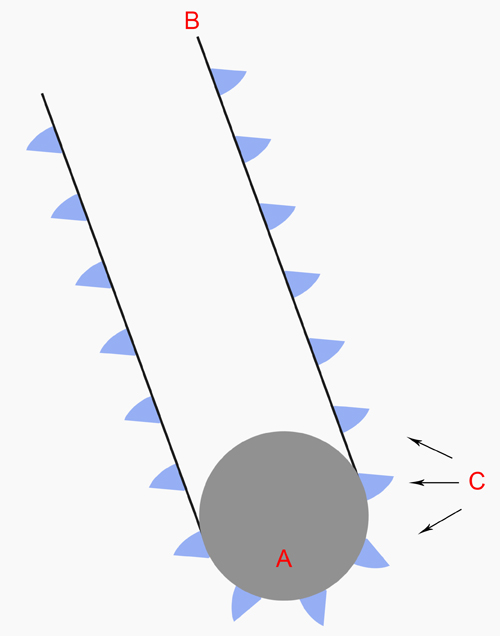
Before the flour can be bolted, it needs to be transported back to the first floor. To facilitate this work, the operation will be carried out by the flour elevator. It consists of two pulleys and two wooden pipes. Inside the elevator, we find a belt fitted with buckets at regular intervals. The wooden pipes protect the flour elevator along its entire length: this way they avoid any loss of flour and at the same time reduce the risk of scattering dust. The buckets will pick up flour on the lower floor and transport it to the first floor, where it will be poured into the boulter. Once the flour has been discharged, the empty buckets will move back down to pick up more flour.